Why talking to a machine works on us: sixty years of evidence
From a 1966 typewriter therapist to a voice that rides along in your raid, the same three reflexes keep firing. What psychology actually knows, from a company that sells one.
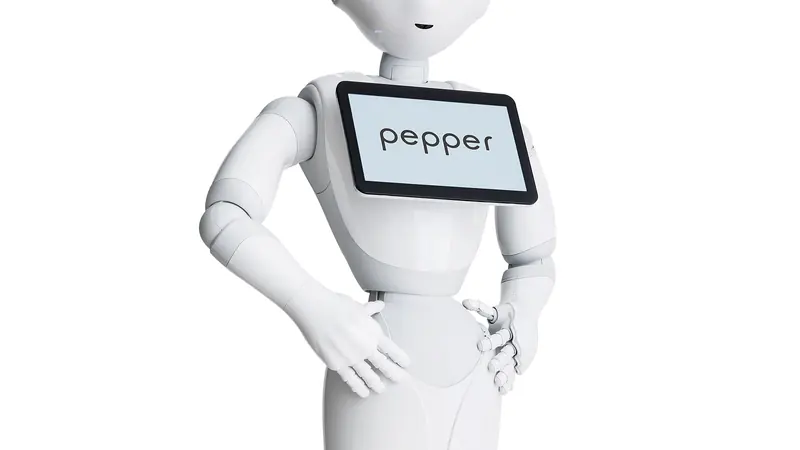
Header image: Photo: Jernej Furman from Slovenia, CC BY 2.0, via Wikimedia Commons.
In 1966 Joseph Weizenbaum described a program called ELIZA in Communications of the ACM. Its best-known script, DOCTOR, matched patterns in what the user typed and handed them back as questions, in the manner of a Rogerian therapist. Yet people wanted to be left alone with it; the story of Weizenbaum's own secretary asking him to leave the room is the one that stuck. His 1976 book, Computer Power and Human Reason, warned that people attribute understanding where none exists. Douglas Hofstadter named the reflex in 1995: the ELIZA effect.
A disclosure first. We make Companion by AI Exodus, an AI voice companion that reads the player's screen with local OCR and talks back in character while they play World of Warcraft, Fortnite or AION 2. It speaks on game events, has a chattiness setting, never touches the controls and has no romance personas. Our parent company, AI Exodus, also operates an AI dating and companion app. We have a commercial stake in the question this article asks.
Reflex one: we treat machines as people without deciding to
Nearly thirty years after ELIZA, Clifford Nass, Jonathan Steuer and Ellen Tauber presented "Computers are social actors" at CHI '94, expanded in Reeves and Nass's The Media Equation (1996). Across many set-ups, people applied ordinary social rules to computers: politeness, reciprocity, a warm response to flattery. They did so knowing perfectly well that the thing was a machine.
Reflex two: lonely people humanise more
Why? Nicholas Epley, Adam Waytz and John Cacioppo gave a three-part answer in "On Seeing Human" (Psychological Review, 2007). We humanise a thing when human behaviour is the readiest model we have for it, when we want to predict or control it, and when we are short of social connection. A follow-up in Psychological Science (2008) tested the third factor directly: lonelier people anthropomorphise more.
Reflex three: a voice sounds like a mind
Juliana Schroeder and Epley's "Mistaking Minds and Machines" (Journal of Experimental Psychology: General, 2016) and Schroeder, Kardas and Epley's "The Humanizing Voice" (Psychological Science, 2017) found that hearing words, rather than reading the same words, increases how much mind a listener attributes to the speaker. A companion that talks pulls harder on the reflex than one that types. That is the strongest reason to say out loud, and often, that the speaker is software.
From radio hosts to Twitch
Donald Horton and Richard Wohl described para-social interaction in Psychiatry in 1956: the one-sided relationship audiences form with performers who cannot hear them. Streaming changed its shape. Kowert and Daniel (Computers in Human Behavior Reports, 2021) argue that live chat makes the bond one-and-a-half-sided, since the streamer sometimes answers, and Sherrick and colleagues (2023) report that these bonds strengthen the sense of community on Twitch. The attachment forms around shared attention to an activity, with a little reciprocity on top.
Thinking aloud helps on its own
Self-directed speech is not a quirk. Vygotsky argued in the 1930s that private speech regulates attention, and Lupyan and Swingley showed in the Quarterly Journal of Experimental Psychology (2012) that saying the name of what you are looking for improves adult visual search. We found no study of this in games, so treat it as a hypothesis: a listener that notes the boss has changed phase may be doing some of the work of your own inner monologue.
What the 2025 trial measured
The largest controlled test so far is from the MIT Media Lab and OpenAI: Fang, Phang and colleagues, arXiv:2503.17473 (March 2025). It randomised 981 people to four weeks of ChatGPT in text, neutral voice or engaging voice, crossed with three conversation types, and logged more than 300,000 messages. Outcomes were loneliness, socialising with real people, emotional dependence and problematic use. The headline is flat: "No significant effects were detected from experimental conditions." What predicted outcomes was dose. Higher voluntary usage "showed consistently worse outcomes" on all four measures, and "higher trust and social attraction towards the AI chatbot" went with "higher emotional dependence and problematic use".
A companion analysis by Phang and colleagues (arXiv:2504.03888) covered over 3 million ChatGPT conversations and a survey of over 4,000 users: "A small number of users are responsible for a disproportionate share of the most affective cues". Caveats: OpenAI co-authored and funded both, four weeks is short, and the product was general-purpose ChatGPT, not a companion app or a game overlay. Mode mattered less than dose, and the dose was chosen by the user.
Feeling heard, and its shadow
De Freitas and colleagues at Harvard Business School, in a June 2024 working paper published in the Journal of Consumer Research in April 2026, report that a conversation with an AI companion reduced loneliness about as much as talking to a person and more than watching YouTube; the mechanism they name is feeling heard. We have not verified their sample sizes. A May 2026 meta-analysis of commercial mental-health chatbots (PubMed 42113705) pooled four randomised trials with 662 participants and found loneliness "partially reduced": g = −0.21, 95% CI −0.39 to −0.03. A small effect.
The shadow is validation. Cheng, Lee, Khadpe, Yu, Han and Jurafsky at Stanford (arXiv:2510.01395, October 2025; Science) report that across 11 models "AI affirmed users' actions 49% more often" than humans did, and that people exposed to it were "more convinced of their own righteousness and less willing to repair their relationships". Yet, they write, "people are drawn to AI that unquestioningly validate". Feeling heard and being flattered are neighbours, and the second is easier to build.
The valley, and why our characters stay fictional
Masahiro Mori's 1970 essay on the uncanny valley (Energy; English translation in IEEE Robotics & Automation Magazine, 2012) argued that affinity for a machine rises with human likeness and then drops sharply just short of the real thing. Our answer is a design bet, not a proven safeguard: our characters are plainly fictional and say so, and they talk about the game rather than becoming the thing you do. The dependence signals in the MIT trial and the Stanford work appeared where the chat itself was the point; whether commentary on a shared task behaves differently is an open question nobody has tested. Every classic study here predates large language models, the trial covered four weeks of a general chatbot, and the measured loneliness effect is small. Pew's June 2026 survey of 5,119 US adults found 4% using chatbots for companionship at all.
- Weizenbaum 1966, ELIZA, Communications of the ACM doi.org
- Nass, Steuer & Tauber 1994, Computers are social actors, CHI '94 doi.org
- Epley, Waytz & Cacioppo 2007, On Seeing Human, Psychological Review doi.org
- Schroeder & Epley 2016, Mistaking Minds and Machines, JEP: General doi.org
- Fang et al. 2025, MIT Media Lab x OpenAI RCT, arXiv:2503.17473 arxiv.org
- Phang et al. 2025, Investigating Affective Use on ChatGPT, arXiv:2504.03888 arxiv.org
- De Freitas et al., AI Companions Reduce Loneliness, HBS Working Paper 24-078 hbs.edu
- Meta-analysis of commercial AI mental-health chatbots, May 2026 (PubMed 42113705) pubmed.ncbi.nlm.nih.gov
- Cheng et al. 2025, Sycophantic AI decreases prosocial intentions, Science doi.org
- Pew Research Center, Americans and AI 2026 pewresearch.org
Written by the Companion team in our own words. Facts, figures and quotes belong to their sources; prices and dates are as of 24 Sep 2026 and can change. We build a screen-reading voice companion ourselves, so read our opinions as a competitor's.